
Some of the links in this post are affiliate links. This means if you click on the link and purchase the book, I will receive an affiliate commission at no extra cost to you.
I’m writing this from the southeastern United States, where we tend to think we are immune because we are Southerners, have air-conditioned homes and cars, and… are too canny to become victims. But the kind of heat we’ve all been confronted with lately is not the usual summer heat: As Jeff Goodell put it in The Heat Will Kill You First (2023), “it is heat as an active force, one that can bend railroad tracks and kill you before you even understand that your life is at risk.”
It can take as little as 90 minutes to die in this kind of heat (Peel, 2021).
In 2003, a European heat wave killed 70,000 people, more than died in the entire Vietnam War. In 2011, 55,000 Russians died in a heat wave. And in 2021, one hit the Pacific Northwest, killing 5,000 people and a billion sea creatures (Goodell, 2023). And this year? Paris’s mortuaries were overwhelmed as deaths across the country added up at the rate of over 1,000 a day (France24, 2026) in their June heat wave, finally topping out at 5,764 souls (CBS News, 2026).
This is not “just the weather.” It is likely also not the summer heat of your childhood that nobody gave a thought to at the time.
Psychological Consequences of Summer Heat
Short of killing you, there isn’t a cell in your body that heat doesn’t affect, and the psychological (including cognitive and emotional) consequences can be nearly as dire. Among the consequences Goodell (2023) lists are lower test scores for children, impulsivity and proneness to conflict, more rapes, violent crime (including gun crime). You get irritable and unfocused, agitated and even confused (Lange, 2023). If you proceed to actual heat stroke but survive, you can come out of it neurologically impaired (University of Chicago, 1998). Point being, the kind of heat we’ve been experiencing this year has psychological consequences for us all.
Psychology is Not All Between Your Ears
I used to say this to my students nearly every week. (OK, maybe really every week.) Heat waves are a great example of how much outside events influence what goes on inside your head! Your mental health and physical health depend not only upon where you are in the world, but on where you are in history. Politics, too, has its effects, not only on policies that either keep us safe or further endanger us, but politics can keep professors from even teaching the things that people need to know for their own safety. Did you know that terms like “climate change” and “global warming” were on the list of terms DOGE was screening for when it was killing research grant funding last year (Connelly, 2025)?
Your Mental Health is at Risk
There is ample evidence that weather events like this affect development profoundly (Wood, 2021). Emotions are affected across the board. Your judgment and ability to make sound decisions deteriorate quickly.
We are deeply attuned to the rhythms of our Mother, Earth. We are the mother, if you think about it, temporary manifestations of all that is the Earth, from her we arise, quite literally: we are water, earth, fire, air, and to her we shall return–the body, at least. And so when her rhythms are disturbed… as is happening now, we suffer (Wood, 2021).
Lots of things affect your mental state, from nutrition to politics to disease to the environment and more. This article will explore some current, relevant physical environmental effects directly upon your brain. It’s well-studied: Climate and environmental psychology is a large subfield in our profession. Some current influences include epidemics and pandemics, heat, wildfire smoke, and noise, light, and air pollution. We’ll touch on all of those this fall.
Mind-body Dualism Isn’t Really a Thing in the World
As you read, consider that one way to look at this is to concede that the brain is not some separate thing, isolated and protected from the outside environment tucked up there inside your skull (or even from the rest of your body — it’s an organ, intimately connected to and no different than your liver or your kidney). There is a steady flow not just of information, but of actual substances and energy, in and out of the brain from and to the environment. Or there is an absence of flow in the case of, for example, starvation. Where does that corn crop that withered in the drought end and your brain begin? Before or after your brain metabolizes the glucose for energy? How about the air you breathe? When, exactly, does it stop being the world’s and start being yours?
In a similar vein, we can’t talk about the brain as if it were only the sum of its parts, or as if it functions in isolation from the entire rest of the universe — because it isn’t, and it doesn’t. This is why I repeatedly say to you that psychology is not all between your ears. It is political. It is geographic. It is economic. It is historical. It is also racialized and it is gendered, as we will explore here.
Age Matters
Everyone is vulnerable, but children and elders are more vulnerable than others.
In utero…
Exposure to heat waves, especially during the second and third trimesters, leads to lower average birth weight and maybe preterm birth, which both have implications for cognitive development. There are a number of pathways for this, one of them being maternal emotions such as anxiety and depression, common responses to extreme weather events, which have been found to be associated with behavior problems in children (Weiten, 2017).
In childhood…
Why? Due to their small size, developing organs and nervous systems, and rapid metabolisms, temperature changes get to them quicker. They become dehydrated more quickly. And children are impulsive and heedless by nature: Even if they know they are too hot or are desperately thirsty, they are not likely to want to end play to come inside and take care of those needs.
In old age…
We’re aging: thirteen percent of the world’s population is over 60 now, and our (because I’m an Old myself) numbers are projected to double by 2050. Fourteen percent of us are living in regions where highs for the day hit 99.5°–or worse, and for the most part those are regions with limited power, air conditioning, and safe water (Carr et al., 2024)–all essential to survival in a heat wave.
Heat can cause delirium in anybody, but old people are more vulnerable to it so it doesn’t take an actual heat wave to get us dizzy and disoriented. The interruptions to sleep can leave us extra depressed and confused the next day, because we’re releasing stress hormones instead of getting restorative rest (Grison & Gazzaniga, 2022; Pontecorvo, 2023; Seo, 2024). If we have mobility issues or just aren’t driving any more, we can’t get to cooling centers or even the park down the road, and the boredom and isolation are the same stresses on us as on anybody else.
Older adults who are already cognitively impaired may not understand the danger or know (or remember, or be able to plan and execute) survival strategies. Body and mind affect each other in this way, as your aging body affects your mind and your mind in turn may not be able to protect your aging body. And even if we’re mentally intact, the older one gets, the less sensitive one is to the body’s signals (like thirst) and so we may not know we need to intervene.
Socio-economic Class Matters
Poor people, who tend to be concentrated in city heat islands and are less able to afford air conditioning, suffer the worst.
Certainly anyone who must work outdoors all day every day is at much higher risk, especially as there are few guardrails (politics again!) to protect them. This is a class issue, as even middle-class-and-above professionals who must work outdoors usually aren’t forced to remain outdoors all day.
Vulnerability to heat is also increased with housing insecurity, which is, of course, deeply dependent on wrong-headed policies–or the lack of policies–which means heat illness is political (Wood, 2021).
Race and Gender Matter
Who else is most vulnerable to climate effects? Women. Racial minorities. Your government’s policies towards those groups are literally matters of life and death when you’re under a heat dome (Wood, 2021).
And so, your mental health suffers.
Dehydration leads to more anxiety and worse cognitive function. Mental health ER visits increase 5-10% on hot days. Monthly suicide rates rise more than 2% in hottest months between 1978 and 2004. Twitter posts use “depressive” language (Pontecorvo, 2023).
My air quality monitor pinged my phone the other night with the following message: “It’s quite warm in here. High temperature can affect cognitive ability.” It was over 77° at the time, as my weather app advises you not to cool the house more than 20° below the outside temperature, and it was hotter ‘n’ Hades out at the time.

Most people don’t realize that our thinking is already getting muzzy by this point, and poor judgment is part of how people wind up sick or dead from the heat. I got off light, as far as I know–the worst thing that happened seems to have been that I put the peanut butter in the freezer, where I discovered it the following morning.
Not funny, really, of course, but sometimes laughter is the coping mechanism of last resort.
What Can You Do (Besides Crack Wise) to Protect Your Brain/Mind?
There are some steps you can take. But this is part of the problem! This framing has made the question of survival a matter of “individual responsibility”, in Republican-speak, when the problem–and therefore the solution–is better-characterized as structural and systemic.
That said, taking action is a powerful coping mechanism so for what it’s worth, here’s my list:
- Heat-proof the house, if you own your home and can afford to.
- If it’s time to replace your roof or repaint, and you have the option, both now come in lighter, heat-reflecting colors. Bad for the environment as a whole, I expect (that’s not my lane), but it could save your life.
- Install an attic fan.
- Install double-glazed windows (which not only cut heat but also noise)
- Hang blackout liners behind your curtains (double benefit: they’ll protect you from noise and light pollution, too).
- Plant a tree, or three.
- Do not, if you lack air conditioning or the power’s out, throw open the windows to try to catch a breeze. That just lets in sun and heat! To keep them out, best you close the windows and drapes early (Goodell, 2023).
- Minimize your use of heat-emitting appliances, turn off lights you don’t absolutely need. This is not the day to run the dryer (or make cornbread).
- Hydrate. But remember, there’s only so much sweat can do for you: Don’t think it makes you an Immortal.
- Watch your kids! Remember that, over and above their physical vulnerabilities, they lack good judgment (that’s why they have you).
- Check in with your elders, and with anybody you know who is diabetic or who has heart or kidney disease. If they need to get to a cooling center, make sure they have a way to get there.
- Vote–for politicians who will enact laws and policies that
- reduce global warming,
- make safe housing affordable,
- take the elderly, disabled folk, and people with pets into account in emergency planning,
- keep workers, residents, and students safe on hot days, and
- invest in heat-proofing public buildings–and making them accessible to old people and folks with disabilities.
Resources
The National Weather Service’s Heat Index gives you a handy chart to print and post on your fridge.
The Weather Channel has free apps for Apple and Android.
WaterMinder has the absolute cutest app for staying on top of your hydration needs. It’s not free, but it’s dirt cheap. (I have no stake in this, by the way). It’s highly personalizable, takes into account all kinds of fluids including smoothies, and as I said, it’s fun and therefore motivating. My avatar is a little old lady with a bun, which tickles me no end. As I start to fill up, she looks like she’s got sagging stockings 😆
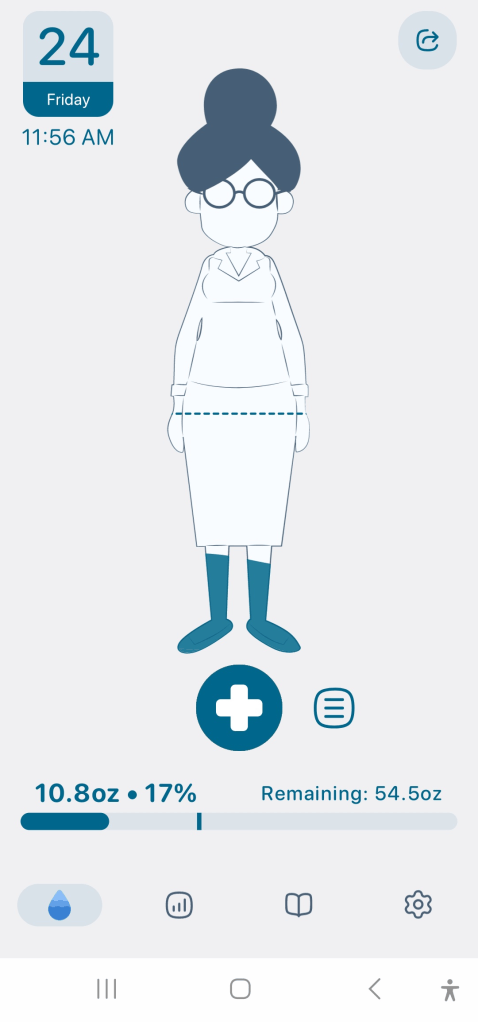
Download it from the App Store, the Mac App Store, or Google Play here.
Dear Reader, if this was helpful in any way, please… buy me a coffee! And remember, whenever you buy a book through my Bookshop storefront, it supports the brick-and-mortar store of your choice and helps me earn kibble money to support these goobers–at no extra cost to you.


References
American Psychological Association. (2026, July 07). The mental toll of heat waves—And how psychology can help. LinkedIn. https://www.linkedin.com/pulse/mental-toll-heat-wavesand-how-psychology-aanyc/
Carr, D., Cian, E. D., Falchetta, G., & Wing, I. S. (2024, May 22). Heat waves can be deadly for older adults: An aging global population and rising temperatures mean millions are at risk. The Conversation. https://doi.org/10.64628/AAI.sfx9er599
Connelly, E. A. (2025, December 22). Federal Government’s Growing Banned Words List Is Chilling Act of Censorship. PEN America. https://pen.org/banned-words-list/
France recorded at least 5,700 more deaths than usual during historic June heat wave. CBS News. (2026, July 22). https://www.cbsnews.com/news/france-deaths-historic-heat-wave-june/
Goodell, J. (2023). The heat will kill you first: Life and death on a scorched planet. Little, Brown.
Grison, S., & Gazzaniga, M. S. (2022). Psychology in your life (4th ed.). W.W. Norton.
Henley, J. (2026, July 22). France records more than 5,700 excess deaths during June heatwave. The Guardian. https://www.theguardian.com/world/2026/jul/22/france-recorded-more-than-5700-excess-deaths-during-june-heatwave
Lange, J. (2023, July 6). This Is How You Die of Extreme Heat. Heatmap News. HEATMAP. https://heatmap.news/climate/heat-wave-stroke-death-die
Paris mortuaries overwhelmed as France counts victims of devastating heatwave. (2026, June 29). France 24. https://www.france24.com/en/paris-mortuaries-overwhelmed-france-counts-victims-devastating-heatwave
Peel, S. (2021, July 14). What’s it like to die from the heat? Willamette Week. https://www.wweek.com/news/2021/07/14/whats-it-like-to-die-from-the-heat/
Pontecorvo, E. (2023, July 18). Your Mind Might Be Overheating. Heatmap News. HEATMAP. https://heatmap.news/climate/heat-waves-mental-health-psychology
Seo, H. (2024, July 6). Heat waves burn us mentally, too. The New York Times.
University of Chicago. (1998, July 31). Severity of classic heat stroke recognized. UChicagoMedicine. https://www.uchicagomedicine.org/forefront/news/1998/august/severity-of-classic-heat-stroke-recognized
Weiten, W. (2017). Psychology: Themes and variations (10th ed.). Cengage Learning.
Wood, V. S. (2021, April 1). Climate Change and Development [Video recording]. Kennesaw State University MediaSpace. https://mediaspace.kennesaw.edu/media/CLIMATE+CHANGE+AND+DEVELOPMENT/1_fsafmwad


Leave a Reply