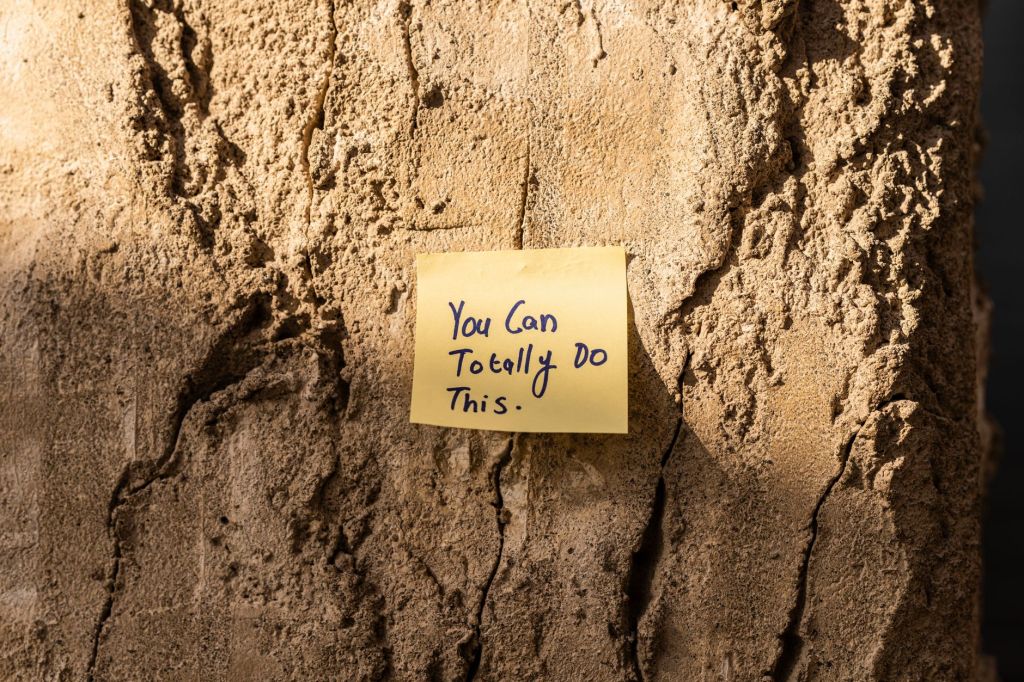
The flip side of the confidence coin is fearfulness.
The best way to build self-confidence
Reflections are one of the best ways I know to build confidence, and they are how I got over my many fears about teaching.
Back in 2017, a bunch of colleagues and I went to a workshop of some sort (I forget now what about) and the one thing I can say for sure all these years later that I came out of it with that was life-changing (yeah, I know, ChatGPT puts that clickbait-y word in every title but this is not ChatGPT, mkay?) was the Reflection. I wrote my first one after class on March 16th that year, and I’ve been doing them religiously ever since.
I wrote that I talked too much in class that day, that my lecture was too long and less lecturing would have left more time for other stuff anyway. A shorter one would have also given me time to practice delivery, I wrote. I didn’t have a clear goal for the class meeting, and was more unfocused than I should have been. And some stuff I thought went well.
I no longer have the blank template she gave us to share here, but this is the gist of it:
- Date
- What it is you’re reflecting on (in my case, the activity, assignment, or assessment)
- What was the most valuable feature of this [thing]?
- What did you learn from this [thing]?
- What did you do to prepare for this [thing]?
- What skills do you need to work on?
- What will you do differently next time?
All five questions reduce fear, build confidence. If you can pull something valuable from any experience, then it’s not a total failure, amirite? If you learned something from it, you’ve won something. It may be hard-won, but it’s yours now! Looking at what you did to prepare for it reduces fearfulness the next time you have to launch into something new and scary because you have a recipe for success right here in your notes. If you know what skills you need to practice, you can do that before the next time. And similarly, you’ve got a list here of new, cool add-ons you want to try and mistakes you won’t repeat.
This process can’t not reduce fearfulness/build confidence.
I don’t mind admitting that in the early years of teaching, I didn’t just lack confidence, I was terrified! And often mortified afterwards by my performance. But I took the workshop leader’s advice to heart, and reflected on every class for years after that. The habit only fell apart when COVID hit and we went online — my work wasn’t scheduled in discrete units after that, and by the time I knew how a thing went it was a week later and we were already on to the next one. It’s vital to reflect right away, when it’s all fresh in your mind!
But I digress.
Like I said, I set out doing one after every class, assignment, and assessment. If I was teaching multiple sections, I might do three in a day on the same course! One year, I had a lunch break in between two sections of my Intro to Psych class. I’d scribble out a fast reflection in Stinger’s after the first lecture, make changes on the fly, teach it again after lunch, and reflect again when I got home. I learned that you can grow in self-confidence literally in the time it takes to eat lunch. I did this for three full academic calendars and change.
The effects were wondrous.
Every semester, as the same modules came up in the rotation, I’d pull the reflections from previous years before I started my planning. By the end, I had five or six sheets at least for every lecture, exam, or in-class activity to draw on. That’s a lot of accumulated wisdom, a ton of data on all the different ways I’d tried presenting psychology, what worked, and what I wouldn’t do again on a bet. I saw patterns of behavior that increased my fear, like not starting prep sooner, and that became an easy fix. I saw all I had done over the years to prepare and hone a lesson and, over time, shifted from a position of insecurity to “Woman, you’ve got this! You can teach this bitch standing on your head!”
But here’s the cool part, and why I recommend reflections so enthusiastically: I didn’t just grow academically. I got stronger spiritually, too. I learned to set boundaries and make self-care a higher priority than it had been. I learned how to manage a classroom, how to read a room, how to negotiate with students (hey, it’s their class, too!) and with admin. I learned how to communicate better, in general. My overall mental health improved as I became less anxious, less shamed about everything (a holdover from an upbringing by highly critical, demanding parents).
And lo and behold, teaching became fun. I can stand up in front of almost any group now and rattle of a lesson on nearly any introductory-level topic (and some pretty esoteric ones) in psychology and love it.
In short, then, if you want to get over a fear, journal the hell out of it. It works!


Leave a Reply