The past decade or so has meant one loss after another, some small, some huge. The deaths of friends and lover? Huge. I ended a first and a second career in that time span. Not being able to hike any more, that was big. Having difficulty blow-drying my hair in the mornings not so much. All along the spectrum, life-altering or trivial, these losses each call for acceptance, adjustment. And acceptance is especially tricky if you’re disabled. Growing up in an ableist culture, your entire life has been about surmounting physical obstacles, pretending there’s no emotional cost, and now you’re not only overcoming, you’re losing ground.
Some of the links in my posts are affiliate links. This means if you click on a link and purchase a book, I will receive an affiliate commission at no extra cost to you.
My world is shrinking. Sometimes I’m ok with it — what choice do I have? — sometimes I’m sad about it, and every now and then I manage to get creative about it. For example, deciding to amp up Birding From Your Chair, the spectator sport I like to think I invented, by doing Feeder Watch one year, or planning to go to Pine Log every weekend of turkey season the following spring, instead of having as my goal just to get up there the once, like I usually did.
Years ago, as the losses were just beginning to accumulate, I read Mary Oliver’s “Where Does the Temple Begin, Where Does It End?”
Where Does the Temple Begin, Where Does It End?
There are things you can’t reach. But
you can reach out to them, and all day long.The wind, the bird flying away. The idea of God.
And it can keep you as busy as anything else, and happier.
The snake slides away; the fish jumps, like a little lily,
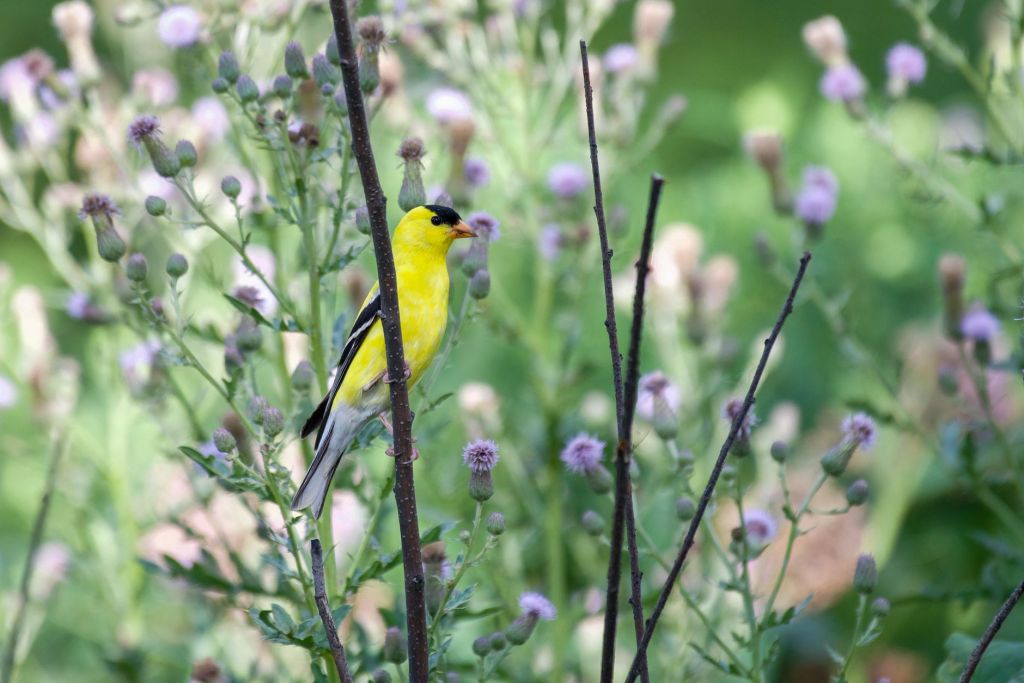
out of the water and back in; the goldfinches sing
from the unreachable top of the tree.I look; morning to night I am never done with looking.
Looking I mean not just standing around, but standing around
as though with your arms open.And thinking: maybe something will come, some
shining coil of wind,
or a few leaves from any old tree–
they are all in this too.And now I will tell you the truth.
Everything in the world
comes.At least, closer.
And, cordially.
Like the nibbling, tinsel-eyed fish; the unlooping snake.
Like goldfinches, little dolls of gold
fluttering around the corner of the skyof God, the blue air.
–Mary Oliver
Aging is a long progression of losses, of things you can no longer reach, or things you thought you might reach some day but never got around to, or couldn’t afford. Never did the Outlander tour, or retired together with the matchy-matchy pickup, trailer, bass boat, and camper we’d fantasized about traveling the U.S. in. Friends die. Colleagues die. The spouse you shared a history and made all these plans with dies.
And it starts earlier than you might think: I was writing 13 years ago about this, when the changes still came as something of a surprise: I had already by that time lost the ability to walk in the woods, or even around the block, and was reduced to my new maxim, “If it can’t be birded from the truck, I don’t bird it.” In another couple of years, I’d become sick with exhaustion even doing that, if I got up at oh-dark-thirty to be in the woods in time for the night birds and the dawn chorus. And in another couple of years, I’d be getting to where I couldn’t clearly see field marks, even with binoculars.
And that’s just birding.
But I re-read the poem the other morning, a few hours later found myself taking afternoon tea out on the back deck with NotMyCat™️, and realized that if I can no longer hold a camera steady or bend my neck to search the sky without supporting my head in my hands, still, if I am really looking, reaching out with eyes and ears and heart, everything comes at least closer, and cordially:
- a squirrels’ nest high in a tulip poplar revealed for the first time by leaf-fall
- the deep forest green of my water oak Ellen’s leaves holding fat clusters of acorns
- the constant clatter of falling acorns on the deck boards
- the love, affection, and invitations to play of the cat who came to me on a day much like this one
- two squirrels playing
- a kettle of turkey vultures streaming silently overhead, wing flaps almost a casual afterthought as they glide slowly south
- the soft musical chatter of a small flock of housefinches unseen
- gentle sun on bare skin
- the harsh calls of jays pretending to be hawks
All these came to me in the time it took to finish a mug of tea. How then could I not be happy?
Clinging to all we’ve lost, mourning it, wishing for it, longing for it, is not just an exercise in futility — it is gone, after all — but it is also a recipe for misery.
To live is to let go, and in order to live fully we must learn to let go fully and to embrace the flow that is the universe… We can only live by letting go, never by holding on (Bodhipaksa, 2017).
What have you experienced of letting go?
If you’d like to receive a notification when I write about how to do it, coming up soon, I hope, just fill out the little form (it’s free and you can always cancel it if it becomes annoying):
If this has meant anything to you, please buy me a coffee! to help support both writer and cat.
And you can buy any book mentioned in any of these posts or appearing in my References lists through my Bookshop.org storefront.

As always, these posts are 100% human-created.
References
Bodhipaksa. (2017, January 26). What you’re made of. Tricycle: The Buddhist Review.
Oliver, M. (2005). Why I wake early: Poems. Beacon. (Click here to buy)


Leave a Reply