Juneteenth reminds us that the struggle for our freedom has always included the fight for liberatory knowledge. –The African American Policy Forum (email June 16, 2026)
And education everywhere is under fire these days.
We’ve come a long way
Psychology has come a long way since the days that a past president of the American Psychological Association, a pioneer in intelligence and ability testing, a professor, researcher, and prolific author, could say with a perfectly straight face that Black children are inferior. Since Black researchers who wanted to publish their work disputing his had to find a white man to sign off on it as first author.
We have, indeed, a whole entire Black psychology, doctoral programs in HBCUs, and professors and researchers in majority-white institutions working towards diversity, equity, and inclusion. We’ve had Black presidents of APA, there are Black professional psychological associations, and I don’t think you’ll find a predominantly white program anywhere without Black professors and students in it. And certainly Black psychologists don’t have to find white scientists to use as cover for their publications any more.
But the past is never really past.
As William Faulkner famously said, the past isn’t over–it isn’t even past. Lewis Terman, the fellow I just mentioned, had a huge influence on generations of educators and on educational policy. His test, the Stanford-Binet (1916), is still widely used, when he intended it for the purpose of segregating and sterilizing (mainly racial minority) children on the basis of their supposed inferiority. And he’s but one example: You will find similar biases from the past still lurking in the shadows of nearly every domain in psychology, from biological to developmental, from the disorders to diagnosis and treatment.
Old ideas die hard.
When I was in training in the ’90s, we were still being taught, just for one example, that intelligence testing was fair, and I only discovered that it wasn’t years later. In fact, The Bell Curve (1994), which reiterated Terman’s (1925) arguments with new (and highly questionable) “evidence”, came out while I was in training, and that is what everybody was discussing back then, not how we could make assessment more fair and accurate.
And lest you think that this is ancient history, keep in mind that my generation of psychologists, most of whom would have been in their 20s back then, are only in their 50s now–and have therefore not only been researching and practicing all these years but have been the ones to train every researcher and clinician since. Black children are still being tested and put into educational tracks in a context of 400 years of murder, kidnapping, enslavement, and Jim Crow.
Worse, virulent scientific racism like Terman’s–the use of science to support racism–has come roaring back over the last decade, along with crap like the Great Replacement Theory, an issue with which Terman, a frank eugenicist, was greatly concerned. Which is all to say, it’s bad out there. Education is under attack everywhere, and liberatory practices are the first targets.
But we try, here at the Docsplainer!
We’re still out here trying, though! I am always hoping that what I teach, here and in the classroom, will be liberatory to all of us non-dominant genders, races, health and disability statuses, and sexual orientations, but especially on this occasion, to my Black students and readers.
So, Happy Juneteenth!
Whether you are in training, in therapy, or just reading this blog because you’re interested in learning more about yourself and the people in your world, my wish for you is that your education be liberatory–if not downright radicalizing– every single day.
Doc
Postscript:
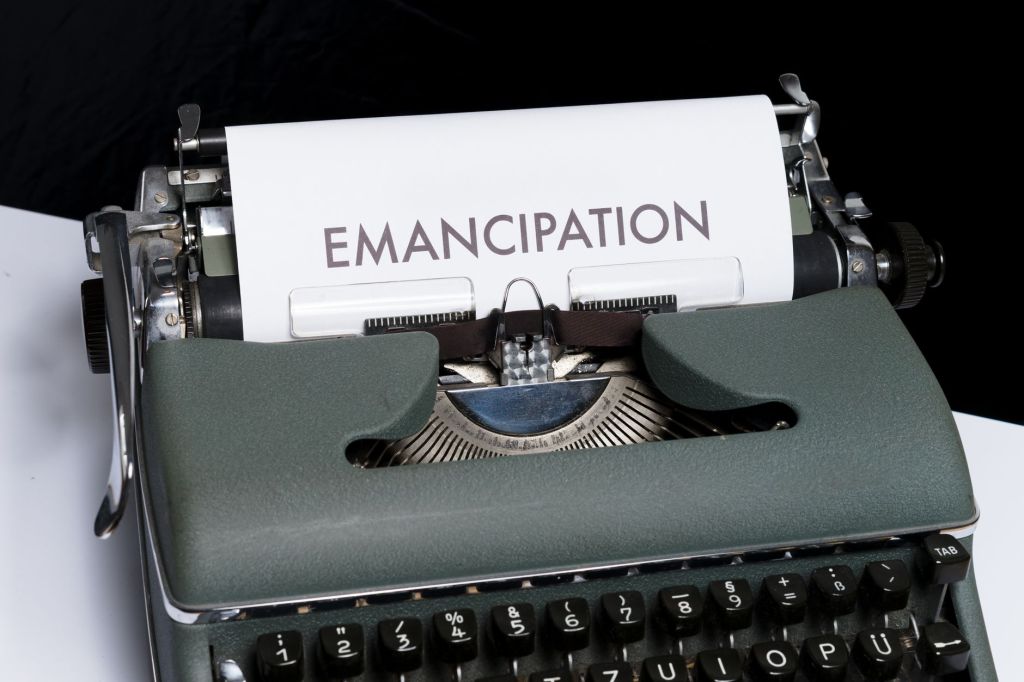
Speaking of liberatory education, the enslaved were self-emancipating to a great degree, both before and during the war, but I had hell’s own time finding a single photo of the United States Colored Troops or anything similar that was free for use at the top of this post.
I found a couple of single portraits of Black soldiers, one re-enactor (cavalry, which I’m not sure happened until the Buffalo soldiers anyway), and most searches turned up white people (soldiers, Lincoln, etc.) at the top. Sigh.
So I gave up.
Which is wild, really, because they were well and thoroughly documented (Dobak’s 2011 history, for example, contains dozens of illustrations).
References
Dobak, W. A. (2011). Freedom by the Sword: The U. S. Colored Troops 1862-1867. St. John’s.
Herrnstein, R. J., & Murray, C. (1994). The bell curve: Intelligence and class structure in American life. Simon & Schuster.
Terman, L. M. (1916). The measurement of intelligence: An explanation of and a complete guide for the use of the Stanford revision and extension of the Binet-Simon Intelligence Scale. Houghton Mifflin.
Terman, L. M. (1925) Mental and physical traits of a thousand gifted children (Genetic studies of genius vol. 1). Stanford University.


Leave a Reply